


Disclosure: This post contains affiliate links. If you buy through them, we may earn a small commission at no extra cost to you. It never changes our advice.

Image: Pure Encapsulations
Magnesium glycinate is one of the most popular mineral supplements, often chosen by people who want magnesium without an upset stomach. But what does it actually do, how much should you take, and which product should you buy? Here is a clear, science-based guide, plus how to pick a good magnesium glycinate supplement .
What is magnesium glycinate?
It is magnesium bound to glycine, an amino acid. Magnesium takes part in hundreds of processes in the body, including muscle and nerve function, energy production, blood sugar control, and bone health. The glycinate form is generally well absorbed and tends to be gentler on the digestive system than some other forms.
Possible benefits (and what the evidence says)
- Correcting low magnesium. This is the clearest use. If your intake or blood levels are low, supplementing can help.
- Sleep. Magnesium is popular for sleep, and some small studies suggest a benefit, but the evidence is limited and mixed.
- Muscle cramps and twitches. People often try it, but studies, especially in older adults, show little benefit for common cramps unless you are actually low.
- Mood and anxiety. Early research is interesting but not conclusive.
- Blood pressure and blood sugar. Some studies show small improvements, mostly in people who are low or have risk factors.
Supplements are not a cure for any condition. If you have symptoms such as persistent fatigue, cramps, or poor sleep, talk to your doctor to find the cause.
Magnesium glycinate vs. other forms
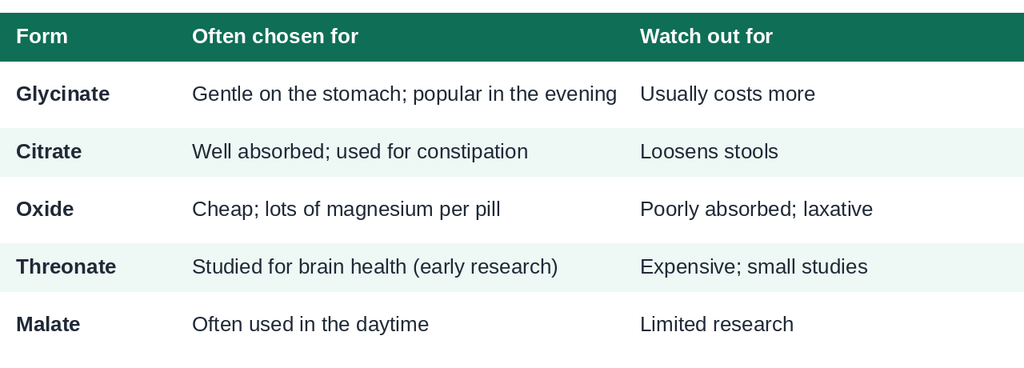
Common magnesium forms and what they are often chosen for.
Want to compare magnesium forms and prices? Browse top-rated magnesium supplements
How much magnesium do you need?
Adults need roughly 310 to 320 mg a day (women) and 400 to 420 mg a day (men) from food and supplements combined, according to U.S. National Institutes of Health guidelines. The upper limit for magnesium from supplements is 350 mg a day for adults, because higher amounts can cause diarrhea. Many people get a good share from food: pumpkin seeds, almonds, spinach, black beans, and whole grains.
How to take it
- Start low, for example one capsule, and see how you feel.
- Take it with food if it upsets your stomach.
- Many people take it in the evening, but timing is a matter of preference, not proof.
- If you take more than one capsule, you can split the dose across the day.
- Count magnesium from all supplements together, such as multivitamins and sleep blends.
How to choose a magnesium glycinate supplement
- Read the label for elemental magnesium. Look for the amount of magnesium itself (for example “120 mg as magnesium glycinate”), not just the weight of the compound.
- Check the serving size. Some products need 2 to 4 capsules to reach a dose.
- Third-party testing, such as NSF or USP, confirmed on the certifier’s website.
- Simple ingredients with no fillers or allergens you want to avoid, such as gluten, soy, or dairy.
- Price per serving, not price per bottle. Compare options here .
Our picks
Replace the bracketed placeholders with products you have verified (dose, serving size, price, testing).
Best simple option: Pure Encapsulations Magnesium (glycinate)

Image: Pure Encapsulations
Per the supplement facts shown in the listing, one capsule provides 120 mg of magnesium (as magnesium glycinate), 29% of the Daily Value, and a bottle contains 90 capsules. The other ingredients are a vegetarian capsule (cellulose and water) and ascorbyl palmitate. The label shows it is gluten-free (with a gluten-free certification mark), and the listing graphic says it is free from GMOs, soy, and dairy, and is vegetarian and vegan. The bottle says it is for sensitive individuals, a brand claim. Check price
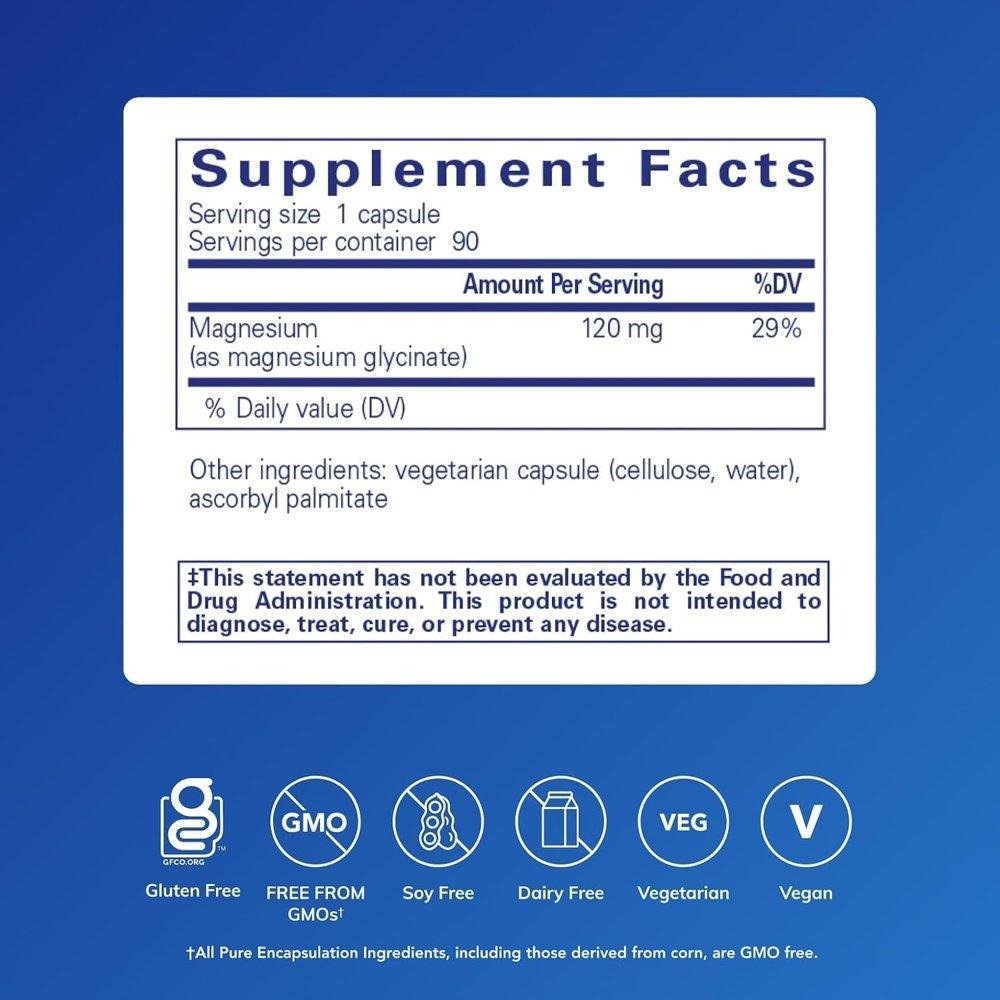
Image: Pure Encapsulations. Supplement facts as shown in the product listing.
Because each capsule has 120 mg, most people reach a typical supplemental amount with 1 to 3 capsules. Keep your total supplemental magnesium at or below 350 mg a day unless your doctor advises otherwise. Third-party testing is not shown in the images, so check the brand’s website or the listing if that matters to you.
Best powder: [Product B, magnesium glycinate powder]
[Elemental magnesium per scoop, flavors, price per serving.] Check price
Best budget: [Product C]
[Elemental magnesium per serving, capsules per serving, price per serving.] Check price
Not sure which dose is right for you? Start low and talk to your pharmacist or doctor. See top-rated magnesium supplements
Side effects and who should be careful
Too much magnesium from supplements can cause diarrhea, nausea, and stomach cramps. People with kidney disease should not take magnesium supplements unless their doctor approves, because the kidneys clear the excess and levels can build up to dangerous amounts. Magnesium can also interact with some medicines, such as certain antibiotics, bisphosphonates, thyroid medication, and diuretics, which is why they are often taken at different times of day. Ask your pharmacist or doctor if you take any medication, are pregnant or breastfeeding, or have heart or digestive conditions.
FAQ
Is magnesium glycinate good for sleep?
Many people find it helpful and use it in the evening, but the research is limited and mixed. It is not a replacement for good sleep habits or medical advice.
How much magnesium glycinate should I take per day?
Follow the label and keep supplemental magnesium at or below 350 mg a day for adults unless a doctor advises more.
Can I take magnesium glycinate every day?
For most healthy adults at a normal dose, yes. People with kidney disease should check with a doctor first.
What is the difference between magnesium glycinate and citrate?
Glycinate is generally gentler on the stomach, while citrate is more likely to loosen stools.
The bottom line
Magnesium glycinate is a gentle, well-tolerated way to top up your magnesium, especially if your diet falls short. Check the elemental magnesium per serving, stay within the supplemental limit, and talk to your doctor if you have kidney disease or take medication. Compare magnesium glycinate supplements here
This article is for general information only and isn’t medical advice. Talk to your doctor or a registered dietitian before starting any supplement.