

Disclosure: This post contains affiliate links. If you buy through them, we may earn a small commission at no extra cost to you. It never changes our advice.

Limited sun exposure is one common reason for low vitamin D. Image: NatureWise.
Feeling tired, achy, or run down all the time? Low vitamin D is a common and fixable cause, but its symptoms are vague, and the only way to know is a blood test. This guide covers the signs, who is at risk, how to test, and how to choose a safe vitamin D3 supplement .
What does vitamin D do?
Vitamin D helps your body absorb calcium and supports bones, muscles, and the immune system. Your skin makes it when exposed to sunlight, and you also get small amounts from fatty fish, egg yolks, and fortified foods such as some milks and cereals.
Vitamin D deficiency symptoms
Many people with low vitamin D have no symptoms at all. When symptoms appear, they are often mild and easy to blame on something else:
- Fatigue and low energy
- Bone or lower back pain
- Muscle weakness, aches, or cramps
- Getting sick more often, such as frequent colds or infections
- Low mood, especially in winter
- Slow wound healing
Severe, long-term deficiency can cause rickets in children (soft, weak bones) and osteomalacia in adults. These symptoms overlap with many other conditions, including thyroid problems, anemia, and depression, so do not assume vitamin D is the cause. Talk to your doctor.
Who is at higher risk?
- Older adults
- People with darker skin, who make less vitamin D from sunlight
- People who spend most of their time indoors, cover most of their skin, or live far from the equator
- People with obesity
- People with conditions that affect absorption, such as celiac disease, inflammatory bowel disease, or kidney and liver disease
- Breastfed infants who do not receive a supplement (follow your pediatrician’s advice)
How to find out: get tested
A blood test for 25-hydroxyvitamin D shows your level. Cutoffs vary between organizations, but this graphic shows the commonly cited ranges.
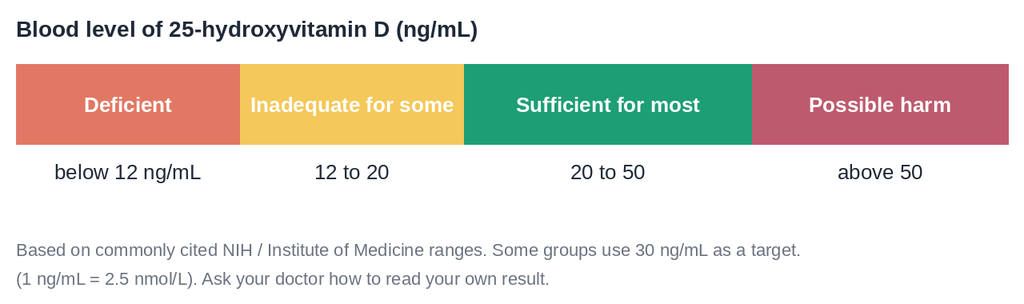
Commonly cited ranges (ng/mL). Different organizations use different targets.
Curious about your level? Ask your doctor, or look at an at-home test.
How much vitamin D do you need?
The U.S. National Institutes of Health recommends 600 IU (15 mcg) a day for most adults and 800 IU (20 mcg) for those over 70. The tolerable upper limit for adults is 4,000 IU (100 mcg) a day. If you are deficient, your doctor may prescribe a higher short-term dose, which is a medical decision based on your blood test.
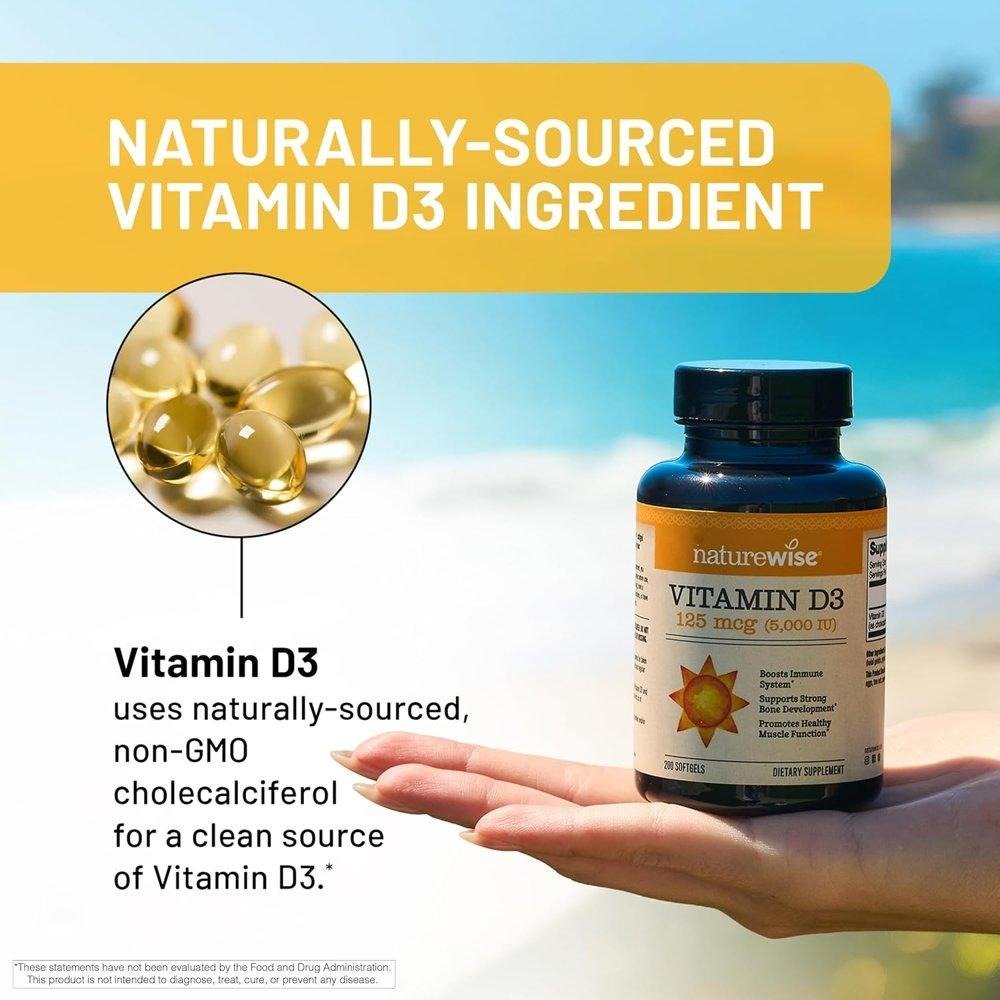
Image: NatureWise. Bottles come in different sizes.
How to take vitamin D
- Take it with a meal that contains some fat, which improves absorption.
- Choose D3 (cholecalciferol), which most research favors over D2 for raising blood levels.
- Be consistent. Taking it at the same time each day helps you remember.
- Retest after about 2 to 3 months if you started treating a deficiency.
How to choose a vitamin D supplement
- Check the dose. Most people do not need more than 1,000 to 2,000 IU a day unless a doctor advises it.
- D3 form, with the amount in both IU and mcg.
- Third-party testing. Look for a certification and confirm it on the certifier’s website.
- Ingredients you can live with, such as the oil in the softgel, gelatin or vegetarian capsules, and allergens.
- Value: a larger bottle can lower the cost per serving. See vitamin D3 softgels here .
Our picks
Replace the bracketed placeholders with products you have verified (dose, form, price, testing).
High-dose option (only if your doctor recommends it): NatureWise Vitamin D3 5,000 IU
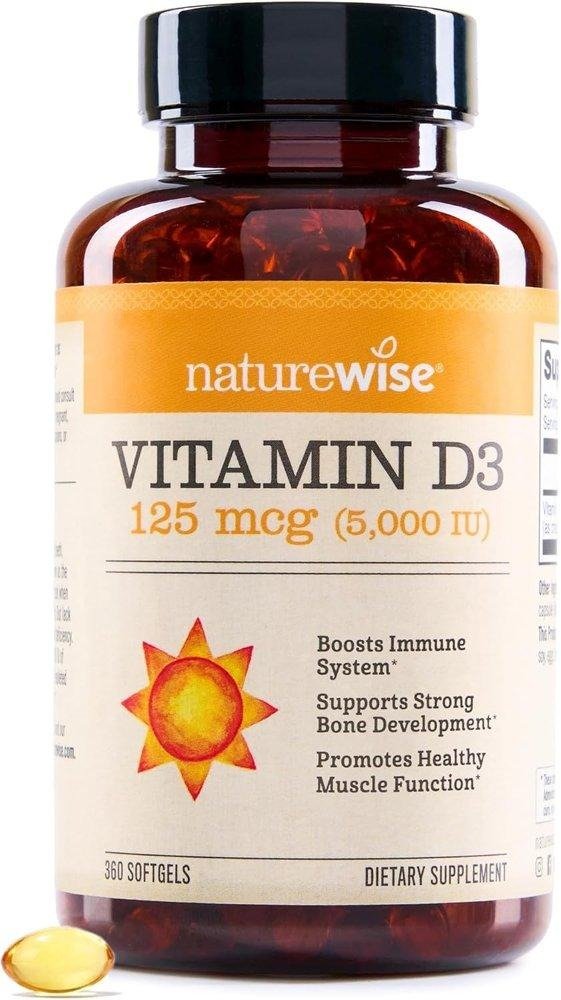
Image: NatureWise
Each softgel contains 125 mcg (5,000 IU) of vitamin D3. That is above the 4,000 IU daily upper limit for adults, so it is not meant as a default daily dose for most people. It can make sense for someone whose doctor has recommended a higher dose after a blood test, or who takes it less often as directed by their doctor. The listing shows 200- and 360-softgel bottles, and the label advertises a small, easy-to-swallow softgel in organic cold-pressed olive oil. Check price
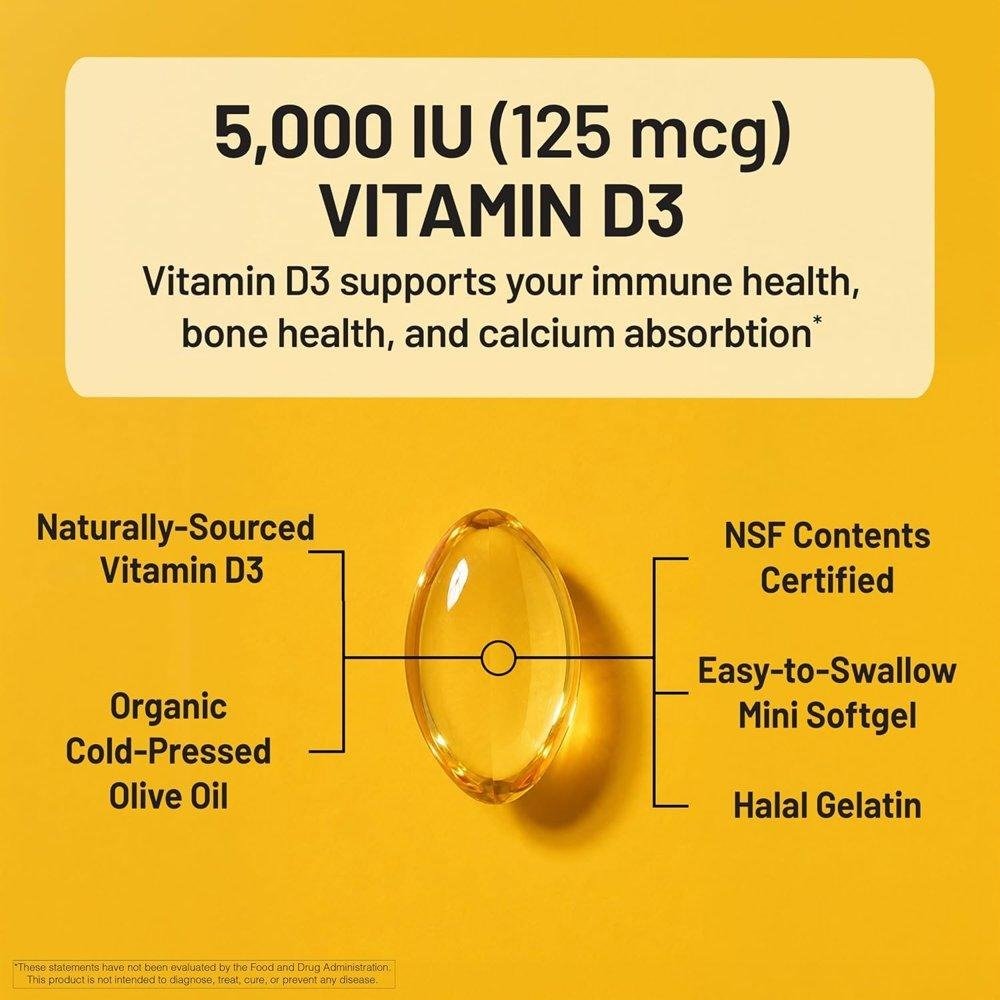
Manufacturer claims. Verify certification on the certifier’s website. Image: NatureWise.
The listing says the product is NSF Contents Certified, which relates to checking that the contents match the label. Confirm this in NSF’s online listing, and note that it is different from the NSF Certified for Sport program. The statements on the label have not been evaluated by the FDA, and the product is not intended to diagnose, treat, cure, or prevent any disease.
To check your level: [Product C, at-home vitamin D test]
[What it measures, how it works, price. Note that a doctor should interpret the result.] Check price
Not sure which dose is right for you? Ask your doctor, then compare options. See top-rated vitamin D supplements
Can you take too much?
Yes. Vitamin D is fat-soluble and can build up. Very high doses over time can raise blood calcium and cause nausea, vomiting, weakness, frequent urination, and kidney problems. Do not exceed the label dose or 4,000 IU a day without medical advice. Talk to your doctor first if you take medication, are pregnant or breastfeeding, have kidney disease, sarcoidosis, or a history of high calcium or kidney stones, or take calcium supplements or certain drugs such as steroids or thiazide diuretics.
FAQ
What are the first signs of vitamin D deficiency?
Often there are none. When they appear, common early signs are fatigue, muscle aches, and bone pain, but these are not specific to vitamin D.
How long does it take to correct a vitamin D deficiency?
It depends on how low you are and the dose used. Many people recheck their blood level after about 2 to 3 months, as their doctor advises.
Can I get enough vitamin D from the sun?
Sometimes, but it depends on season, latitude, skin tone, time outdoors, and sunscreen use. Many people still fall short, especially in winter.
Is 5,000 IU of vitamin D safe?
It exceeds the 4,000 IU adult upper limit, so use it only if a doctor recommends it.
The bottom line
Vitamin D deficiency is common, and its symptoms are easy to miss. If you suspect low levels, get a blood test, and choose a supplement with a dose that matches your needs and your doctor’s advice. Compare vitamin D supplements here
This article is for general information only and isn’t medical advice. Talk to your doctor or a registered dietitian before starting any supplement, especially at high doses.