

Disclosure: This post contains affiliate links. If you buy through them, we may earn a small commission at no extra cost to you. It never changes our advice.
Caffeine and pre-workout: dosage, timing, and what to buy.
Most pre-workout supplements run on one main ingredient: caffeine. It’s cheap, well studied, and it works. But dose and timing matter, and so does knowing what else is in the tub. Here’s what the evidence says, and how to pick a good pre-workout supplement.
Does caffeine really improve workouts?
Yes. Research reviewed by the International Society of Sports Nutrition shows caffeine can improve endurance, power, and perceived effort, and it may help you push out a few more reps. Effects are modest but real, and they vary a lot from person to person.
How much caffeine do you need?
The ISSN position is about 3 to 6 mg per kg of body weight, taken around 60 minutes before exercise. For a 70 kg person, that’s roughly 210 to 420 mg. Beginners and caffeine-sensitive people should start well below that. Doses above this range add side effects, not benefits. For context, the FDA says up to about 400 mg a day is not generally associated with negative effects in healthy adults.
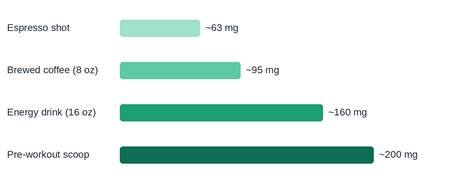
Approximate caffeine per serving (typical values; labels vary, and many pre-workouts contain 150 to 300 mg or more).
When should you take it?
Take it 30 to 60 minutes before training. Caffeine’s half-life is around 5 hours (it varies), so a late-day dose can hurt your sleep. A common rule is to stop caffeine at least 6 to 8 hours before bed.

Caffeine timing for training.
Looking for a pre-workout with clearly listed doses? Browse top-rated pre-workouts

Caffeine in softgel form. Always follow the dose on the label. Image: Smarter Vitamins.
What else is in pre-workout?
- Citrulline (6 to 8 g): may improve blood flow and endurance. Many products underdose it.
- Beta-alanine (about 3 to 6 g a day): can help with high-rep efforts. The tingling it causes is harmless.
- L-theanine (often 100 to 200 mg): an amino acid found in tea. Some studies suggest it may smooth out the jitters from caffeine and support focus, but evidence for athletic performance is limited.
- Creatine (3 to 5 g): works with daily use, not just before training.
- Proprietary blends: avoid them. If the label hides amounts, you can’t tell what you’re getting.

L-theanine comes from green tea leaves. Image: Smarter Vitamins.
How to choose a pre-workout
- Caffeine amount clearly listed, and a dose that fits your weight and tolerance.
- Full ingredient amounts, with no hidden blends.
- Third-party testing, such as NSF Certified for Sport or Informed Sport, especially for tested athletes.
- A stimulant-free pre-workout if you train in the evening.
Our picks
Best simple caffeine + L-theanine option: Smarter Vitamins Caffeine + L-Theanine
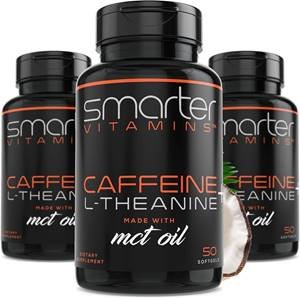
Softgels that combine caffeine and L-theanine, made with MCT oil, sold in bottles of 50. This is a caffeine supplement, not a full pre-workout formula, so it suits people who just want a measured caffeine dose. Check the label for the caffeine amount per softgel before you choose a dose. Check price
Best budget: plain caffeine or coffee
A cup of coffee 45 minutes before training works for many people and costs far less than a pre-workout tub.
Not sure where to start? Begin with half a serving to test your tolerance. See top-rated pre-workouts
Side effects and who should avoid it
Too much caffeine can cause jitters, a racing heart, anxiety, stomach upset, and poor sleep. Skip pre-workout or talk to your doctor first if you have a heart condition, high blood pressure, or anxiety, take medication, or are pregnant or breastfeeding (guidance for pregnancy is generally about 200 mg a day or less). It isn’t recommended for anyone under 18.
FAQ
How much caffeine is in pre-workout?
Most contain about 150 to 300 mg per serving, and some more. Check the label.
How long before a workout should I take it?
About 30 to 60 minutes before, when caffeine peaks.
Is caffeine in pre-workout safe?
For most healthy adults, up to about 400 mg a day isn’t generally linked to negative effects, but sensitivity varies.
The bottom line
Caffeine is the proven core of most pre-workouts. Use 3 to 6 mg per kg at most (less if you are new or sensitive), take it 30 to 60 minutes before training, and stop 6 to 8 hours before bed. Pick a product with clear labels and third-party testing. Compare pre-workouts here
This article is for general information only and isn’t medical advice. Talk to your doctor or a registered dietitian before starting any supplement.